
Cours Magistral de Sandrine ORIEZ : Le syntagme verbal (Programme de L3 permettant la préparation du CAPES)
- Professor: Anne-Laure Besnard
- Professor: Sandrine Oriez
- Professor: Manon Philippe

TD de linguistique anglaise de Mme Besnard (Groupe 3 en 2026-27).
Compléments de cours et corrigés.
Compléments de cours et corrigés.
- Professor: Anne-Laure Besnard
- Professor: Manon Philippe
- Professor: Anthony Larson
- Professor: Anais Le Fevre-Berthelot
- Professor: Gildas Le Voguer

- Professor: Manon Philippe


Cursus space for the option in L3 Anglais: 19th century American history.
- Professor: Anthony Larson

TD classes for L3S5 "Langue professionnelle"
- Professor: Katherine Tidmarsh

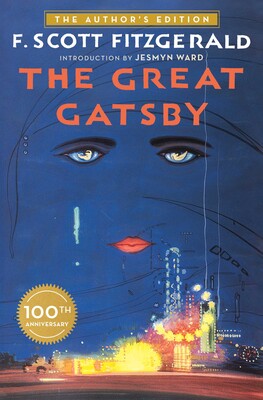
Civilisation des États-Unis - The 1920s – Licence 3 –
The 1920s, often called the Roaring Twenties, was a decade of change and tension. It was an age of mass production and mass consumption, which meant progress but also social anxiety. The rapid industrialization and urbanization of the country led to economic prosperity but the decade ended with a major economic crash in 1929. Social progress was genuine but reactionary forces fueled the Prohibition as well as the nativist movement and the rebirth of the Ku Klux Klan. In addition to that, the fear that Communism and Socialism might spread in the United States led the government to take drastic measures, curtailing freedom of expression. The 1920s was a contrasted era, a decade of reform and reaction.
Frederick Lewis ALLEN, Only Yesterday: An Informal History of the 1920’s, New York, HarperCollins, Perennial Classics, [1931] 2000.
André KASPI, Les États-Unis au temps de la prospérité, 1919-1929, Paris, Hachette, 1994.
Sylvia LE BARS, The American Twenties, PUR, 1993
The 1920s, often called the Roaring Twenties, was a decade of change and tension. It was an age of mass production and mass consumption, which meant progress but also social anxiety. The rapid industrialization and urbanization of the country led to economic prosperity but the decade ended with a major economic crash in 1929. Social progress was genuine but reactionary forces fueled the Prohibition as well as the nativist movement and the rebirth of the Ku Klux Klan. In addition to that, the fear that Communism and Socialism might spread in the United States led the government to take drastic measures, curtailing freedom of expression. The 1920s was a contrasted era, a decade of reform and reaction.
Frederick Lewis ALLEN, Only Yesterday: An Informal History of the 1920’s, New York, HarperCollins, Perennial Classics, [1931] 2000.
André KASPI, Les États-Unis au temps de la prospérité, 1919-1929, Paris, Hachette, 1994.
Sylvia LE BARS, The American Twenties, PUR, 1993
- Professor: Gildas Le Voguer
- Professor: Anita Cornic
- Professor não editor: Anne-Laure Besnard
- Professor não editor: David Haigron
- Professor não editor: Leila Hammami
- Professor não editor: Maggy Hary-Moussay
- Professor não editor: Sebastian Jesus Sanchez Carrera
- Professor não editor: Rachidatou Sofiani
- Professor não editor: Maria Tang
- Professor não editor: Aliette Ventejoux
- Professor não editor: Brian Wilson

- Professor: Aurore Caignet
- Professor: David Haigron
- Professor: Maggy Hary-Moussay
- Professor: Anthony Larson
- Professor: Anais Le Fevre-Berthelot
- Professor: Manon Philippe
- Professor: Maria Tang
- Professor: Aliette Ventejoux
- Professor: Audrey Verret
- Professor: Adrian Morfee
- Professor: Aliette Ventejoux